
TL;DR
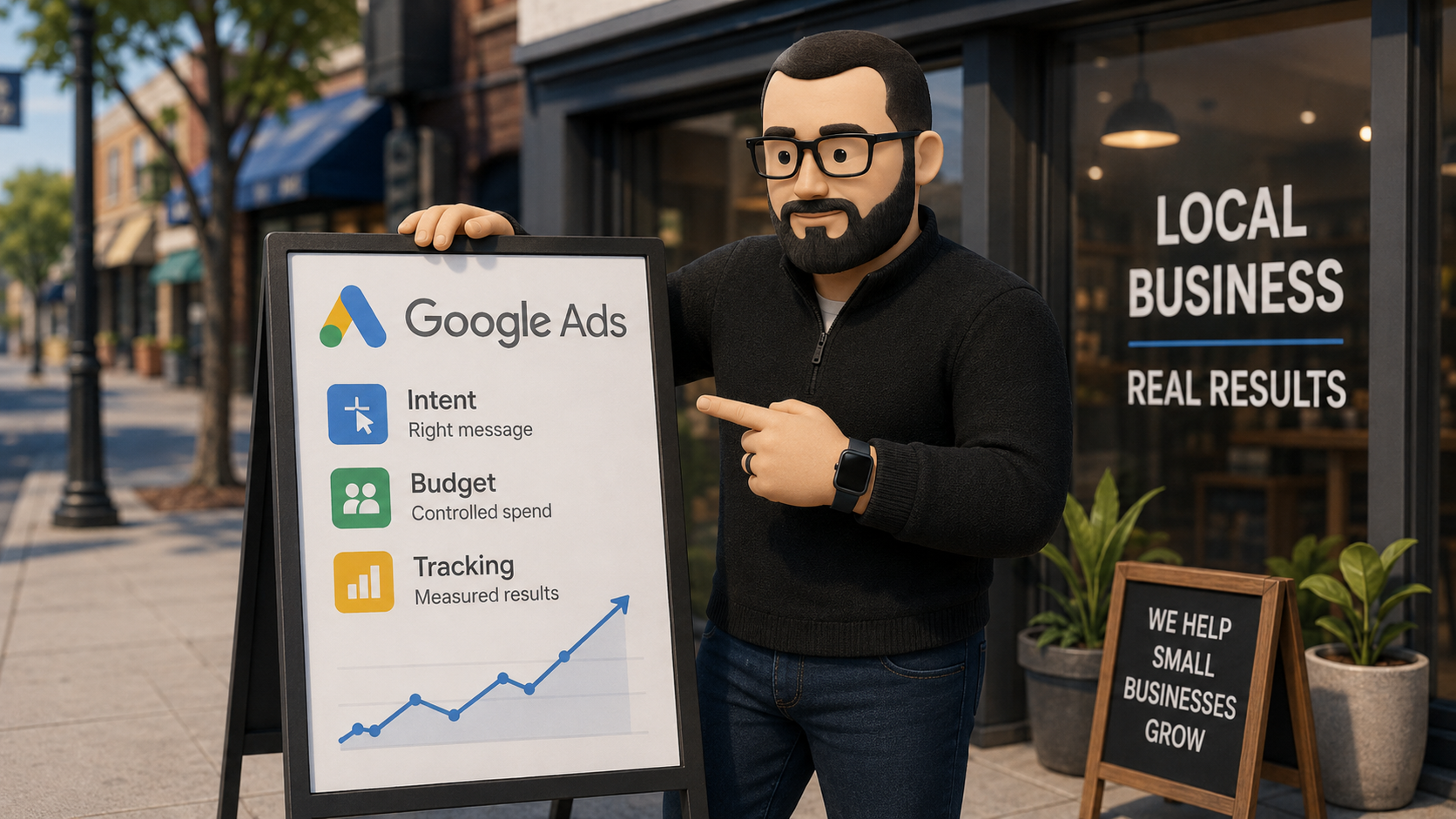
Google Ads can drive consistent leads when campaigns are built around intent, controlled budgets, and accurate tracking. Most failures come from poor structure, weak targeting, and lack of optimization. A focused paid search strategy turns ads into a predictable growth channel.
Many business owners try paid search expecting quick wins. They launch campaigns, spend a few hundred dollars, and hope leads follow. When they do not, the conclusion is often that the platform does not work.
That is rarely the real issue.
Most campaigns fail because they are not built around how people actually search and decide. Without the right structure, even a small budget can be wasted quickly. With the right structure, even a modest budget can produce consistent, qualified leads.
This guide explains how to use Google Ads for small business in a way that reflects real constraints, real budgets, and real buying behavior.
What Actually Works and What Wastes Money
The success of Google Ads is not based on how many people see your ads. It is based on how many of the right people take action. This is the core principle behind effective pay per click advertising.
What works is intent driven targeting. Search ads capture users actively looking for a service. This makes them the most reliable format for businesses trying to generate leads quickly.
What wastes money is overexposure. Many accounts rely on broad targeting, automated placements, or poorly defined keywords. These approaches increase traffic but reduce relevance. In ppc for small business, relevance is everything.
Local Google Ads often outperform broader campaigns because they limit exposure to the areas you actually serve. When combined with strong messaging, this creates a more efficient path to conversion.
A strong Google Ads strategy for small businesses focuses on precision. This includes tightly grouped keywords, restricted locations, and ad copy designed to attract qualified prospects while filtering out low intent users.
Does Google Ads Work for Small Businesses
The question is not whether the platform works. The question is whether it works for your business model.
Google adwords for small business campaigns succeed when customer value supports acquisition cost. If a new customer generates significant revenue or repeat business, higher cost per click can still produce strong returns.
If margins are low or conversion rates are weak, even cheap clicks can become expensive.
This is why every small business ppc strategy should start with a simple calculation. What is a lead worth and how often do leads convert into paying customers. Without this, it is impossible to evaluate performance.
Is Google Ads worth it for small businesses? In many cases, yes. Especially for service based companies with strong local demand. However, success depends on aligning your campaign with your pricing, your sales process, and your customer lifetime value.
How Much Does Google Ads Cost for a Small Business
Cost is one of the most misunderstood parts of Google Ads management. There is no fixed price. Costs vary based on competition, industry, and keyword demand.
Some industries see clicks for a few dollars. Others see costs exceed fifty dollars per click. This is why asking how much do Google Ads cost rarely leads to a useful answer.
A practical starting point for a Google Ads budget small business plan is twenty to thirty dollars per day. This allows enough data to begin optimization without overcommitting resources.
Is ten dollars a day enough for Google Ads? In most cases, no. At that level, campaigns struggle to generate enough data to improve performance. Budget constraints limit testing and delay results.
Another common concern is why Google Ads charged five hundred dollars. In most cases, this reflects accumulated daily spend over a billing cycle, not a single unexpected charge.
The real focus should be efficiency. A smaller, well structured campaign often outperforms a larger, poorly managed one.
Which Campaign Type Should You Start With
When learning how to use Google Ads for small business, the best starting point is search campaigns.
Search ads target users based on what they are actively looking for. This makes them the most direct and controllable form of pay per click advertising.
Other formats like display or performance max rely more heavily on automation and broader targeting. While they have value, they require more data and larger budgets to perform well.
A focused Google Ads campaign setup begins with a single search campaign built around high intent keywords. These keywords should reflect specific services and locations rather than general topics.
This approach keeps your budget concentrated on the users most likely to convert. It also makes optimization more straightforward as performance data becomes clearer over time.
Setting Up Your First Campaign the Right Way
A successful Google Ads campaign setup begins with clarity. What action do you want users to take. Calls, form submissions, or visits should be defined before any ads go live.
Keyword selection should prioritize intent. Phrases that include service and location tend to perform best. Broad or informational searches often attract users who are not ready to act.
Ad copy must align with that intent. If a user searches for a specific service, your ad should reflect that exact need. This improves both click quality and conversion rates.
Landing pages are equally important. A disconnect between the ad and the page reduces trust and lowers performance. Clear messaging and easy contact options are essential.
Finally, Google Ads conversion tracking must be implemented from the start. Without it, you cannot measure results or make informed decisions about your campaigns.
Settings That Quietly Waste Budget
Many Google Ads mistakes happen during setup, often without the advertiser realizing it.
Location targeting is a common issue. By default, ads may show to users interested in your location rather than those physically present. This leads to wasted spend outside your service area.
Keyword match types also play a role. Broad match can trigger ads for loosely related searches, increasing irrelevant traffic. More controlled match types help maintain quality.
Automated features can introduce inefficiencies as well. While some recommendations are helpful, others prioritize increased spend rather than improved performance.
Google Ads tips for small business often come down to maintaining control. The more precise your targeting, the more predictable your results.
Measuring What Actually Matters
Many advertisers focus on clicks and impressions. These metrics are easy to track but do not reflect business outcomes.
Google Ads management should prioritize conversion data. This includes cost per lead, conversion rate, and overall return on ad spend.
Google Ads conversion tracking allows you to identify which keywords and ads generate real results. Over time, this data reveals patterns that guide optimization decisions.
More advanced strategies may include tracking offline conversions. For example, leads that turn into customers after a phone call can be fed back into the system.
This level of insight transforms search ads from a cost into a measurable growth channel.
Common Mistakes That Burn Small Budgets
Small business advertisers often repeat the same errors when starting with ppc for small business.
One major issue is poor structure. Combining multiple services or audiences in one campaign makes it difficult to optimize performance.
Another common mistake is ignoring search term data. This report shows exactly what users searched before clicking your ad. Reviewing it regularly helps eliminate irrelevant traffic.
Lack of ongoing optimization is also a problem. Campaigns require consistent adjustments based on performance data.
Weak landing pages are another critical issue. Even well targeted ads cannot overcome a poor user experience.
These Google Ads mistakes are avoidable, but only when campaigns are actively managed and refined over time.
DIY or Work With a Professional
Managing campaigns internally is possible, especially at a basic level. Many business owners start this way to test demand and understand the platform.
However, as competition increases, campaigns become more complex. Effective Google Ads management requires ongoing testing, analysis, and strategic decision making.
A strong Google Ads strategy small business owners rely on involves more than just launching ads. It requires understanding user behavior, refining targeting, and improving conversion rates over time.
Working with a professional can help accelerate results and avoid costly mistakes. The value comes from experience and structured execution rather than trial and error.
What Comes Next for Sustainable Growth
Once campaigns begin generating consistent results, the focus shifts to scaling.
This involves expanding keyword coverage, refining targeting, and improving conversion efficiency. Growth should always be tied to performance data.
Increasing spend without improving efficiency can reduce profitability. This is why optimization must continue as campaigns grow.
Over time, integrating paid search with broader marketing efforts such as SEO and website optimization creates a more stable growth system.
Paid search performs best when it is part of a larger strategy that includes search visibility, user experience, and conversion focused design.
Build a Smarter Paid Search Strategy
Google Ads offers a powerful way to generate leads, but only when approached strategically. Success depends on structure, targeting, and continuous improvement.
Businesses that treat pay per click advertising as a long term investment tend to see consistent returns. Those that rely on short term tactics often struggle to justify the cost.
Understanding how to use Google Ads for small business is not about mastering every feature. It is about focusing on what drives real results and avoiding what wastes budget.
For expert-level insight and personalized solutions, reach out to the aPowers Media team today.
Key Takeaways
- High intent targeting is the foundation of effective pay per click advertising
- A clear Google Ads strategy small business approach improves efficiency and results
- Budget discipline is critical in ppc for small business success
- Google Ads conversion tracking is essential for measuring performance
- Most wasted spend comes from poor targeting and avoidable Google Ads mistakes
- Long term growth comes from continuous optimization and data driven decisions